
Introduction
A comfortable building needs more than a working furnace and air conditioner. It needs a steady supply of outdoor air to dilute pollutants, manage moisture, and keep rooms from feeling stuffy.
Many building owners assume their HVAC equipment already handles this. It doesn't. A furnace, air conditioner, or recirculating fan moves air around a space, but it doesn't necessarily bring in fresh outdoor air or remove stale indoor air.
That gap matters. According to EPA's indoor air guidance, insufficient air exchange allows pollutants to build up indoors over time.
This guide breaks down what HVAC ventilation actually is, the four main system types, how ventilation connects to indoor air quality, and what to consider when selecting and maintaining a system for a U.S. building.
Key Takeaways
- Ventilation exchanges stale indoor air for outdoor air; filtration and air cleaning serve a different purpose
- Four core approaches exist: exhaust-only, supply-only, balanced, and energy-recovery (HRV/ERV) ventilation
- Climate, humidity, airtightness, occupancy, and pollutant sources all shape the right system choice
- Proper sizing, duct design, controls, and ongoing maintenance determine whether a system actually improves air quality
- Skipping commissioning or upkeep can create comfort and energy problems instead of solving them
What Is an HVAC Ventilation System and How Does It Work?
HVAC stands for heating, ventilation, and air conditioning, but these are three distinct functions. Heating and cooling condition the air already inside a building. Ventilation is the controlled movement of air into, out of, and through that building.
A basic ventilation cycle works like this: outdoor air enters through an intake, fans distribute it to occupied spaces, and an equal (or roughly equal) volume of stale indoor air exits through an exhaust point. Done well, this cycle keeps carbon dioxide, moisture, and indoor-generated odors from accumulating.
Ventilation vs. Recirculation and Filtration
Recirculation is often mistaken for true ventilation. A recirculating fan or a standard air handler can run constantly without introducing any new outdoor air at all. Filters remove particles from the air passing through them, but they don't address gases like carbon dioxide or VOCs.
Ventilation, filtration, purification, and conditioning solve different problems:
- Ventilation dilutes and removes indoor-generated pollutants with outdoor air
- Filtration captures particles already circulating through the system
- Purification (UV, ionization, etc.) targets specific contaminants, typically biological
- Heating, cooling, and dehumidification condition air temperature and moisture, not its source
Core Components
A mechanical ventilation system typically includes:
- Outdoor-air intake and exhaust outlet, properly separated
- Supply and exhaust fans
- Ductwork and dampers to direct airflow
- Filters to protect equipment and occupants
- A heat or energy exchange core (in recovery systems)
- Sensors and controls to manage airflow and operation
Why This Affects Energy Bills
Bringing in untreated outdoor air means heating it in winter or cooling and dehumidifying it in summer. In high-occupancy buildings like schools, ventilation can account for as much as 70% of the total heating and cooling load, according to Building Performance Equipment's internal project data.

That's why recovery ventilation exists: it recovers energy from the exhaust air stream before it leaves the building, lowering the conditioning burden on the HVAC system.
How much outdoor air you need, and how you deliver it, still depends on the building. A home office needs background fresh-air exchange; a tannery or print shop may need engineered exhaust for specific chemical fumes. Those applications require specialized design, not general-purpose ventilation.
What Are the Four Types of Ventilation Systems?
Ventilation strategies fall into four broad categories, each with a different airflow mechanism and a different set of trade-offs.
Natural Ventilation
This relies on windows, doors, vents, and building leakage to exchange air. It costs nothing to operate, but it depends entirely on outdoor conditions.
Limitations include:
- Inconsistent airflow depending on wind and temperature
- Security and noise concerns when windows stay open
- No filtration of incoming outdoor pollution or pollen
Exhaust-Only Ventilation
A fan pulls stale air out (common in bathrooms and kitchens), and replacement air seeps in through leaks or passive vents. It's simple and inexpensive, but it depressurizes the building. In humid climates, that can pull moisture into wall cavities through gaps and cracks.
Supply-Only Ventilation
A fan pushes filtered outdoor air in, pressurizing the building, and air exits through leaks or dedicated openings. This allows for intake filtration, but in cold climates, pressurization can push warm, moist indoor air into colder wall assemblies, creating condensation risk.
Balanced Ventilation (Including HRV/ERV)
Balanced systems supply and exhaust roughly equal air volumes using coordinated fans. This produces more predictable air exchange when properly designed and commissioned.
HRVs and ERVs are energy-recovery forms of balanced ventilation:
- HRVs transfer sensible heat between the outgoing and incoming air streams
- ERVs transfer sensible heat and some moisture, without mixing the two air streams together
According to the Department of Energy, most energy recovery ventilators recover roughly 70% to 80% of the energy in the exiting air stream. DOE also notes recovery ventilation tends to pay off fastest in extreme climates with high fuel costs, and may not be cost-effective everywhere.
| Approach | Control | Energy Impact | Humidity Handling | Complexity |
|---|---|---|---|---|
| Natural | Minimal | None | Uncontrolled | Low |
| Exhaust-only | Moderate | Some loss | Depressurization risk | Low-moderate |
| Supply-only | Moderate | Some loss | Pressurization risk | Moderate |
| Balanced HRV/ERV | High | Recovered (70-80%) | Managed, not eliminated | Higher |
How Does HVAC Ventilation Affect Indoor Air Quality?
Outdoor-air exchange dilutes carbon dioxide, VOCs, cooking byproducts, and cleaning-product emissions that build up indoors. But ventilation doesn't eliminate pollution sources. Source control, meaning reducing or removing what's generating the pollutant in the first place, remains the more effective fix for persistent problems.
Humidity Is a Balancing Act
Inadequate exhaust can let moisture accumulate, raising mold and condensation risk. Too much uncontrolled outdoor air, depending on climate, can either dry out a space or add unwanted moisture.
ERVs help by transferring some moisture between air streams. BPE's Regenerative Condensate® Return technology, for example, has shown roughly 34% latent efficiency during hot, humid summer conditions in internal testing, rather than letting condensation drain back into the building.
Particulates Need Filtration, Not Just Airflow
Ventilation exchanges air; it doesn't capture particles on its own. Filters and air cleaners handle that job separately. A well-designed system pairs outdoor-air exchange with appropriate filtration, such as MERV 13 media in higher-demand applications.
Comfort and Occupant Experience
Poor ventilation shows up as stuffiness, lingering odors, uneven airflow, and drafts. A hair salon client, Grateful Heads, needed roughly 900 cfm of air exchange to clear chemical odors from keratin treatments. Once properly sized ventilation was running, salon odors reportedly cleared almost instantly.
High-Occupancy Spaces Need Extra Attention
Schools, multifamily buildings, offices, and healthcare spaces often need occupancy-based controls. A 2020 Berkeley Lab study of 104 California classrooms found equipment, fan-control, or filter-maintenance problems in 51% of classrooms examined, even after recent HVAC retrofits. The researchers linked this to missing commissioning and inadequate controls, not just equipment age.
Combustion appliances, garages, and chemical-process exhaust require properly engineered, dedicated exhaust systems. General ventilation isn't a substitute for safety-critical exhaust design.

How to Choose and Design an HVAC Ventilation System
Selecting a system starts with the building, not the equipment catalog. Consider:
- Building type, occupancy, and floor area
- Airtightness and climate zone
- Seasonal humidity patterns
- Known pollutant sources
- Existing ductwork and available electrical capacity
- Project goals, including energy and IAQ targets
Sizing should follow calculated ventilation requirements, not the biggest fan available. ASHRAE Standard 62.1 and local building codes set minimum outdoor-air rates based on occupancy and floor area. A qualified engineer should confirm how those requirements apply to a specific project.
HRV or ERV?
- Colder, drier climates generally favor HRVs, which focus on heat transfer
- Humid climates generally favor ERVs, which also manage moisture transfer
- Cold-climate installations need a defrost strategy, since frost buildup can degrade airflow
- Maintenance access and expected operating schedule affect long-term performance
Installation and Commissioning
A few details separate a system that works from one that doesn't:
- Separate intake and exhaust to prevent short-circuiting of stale air back into the supply
- Seal and insulate ductwork to prevent energy loss and condensation
- Balance airflow so actual supply and exhaust match the design numbers
- Manage condensate paths to prevent water damage
- Verify pressure relationships between spaces, especially where contaminant control matters
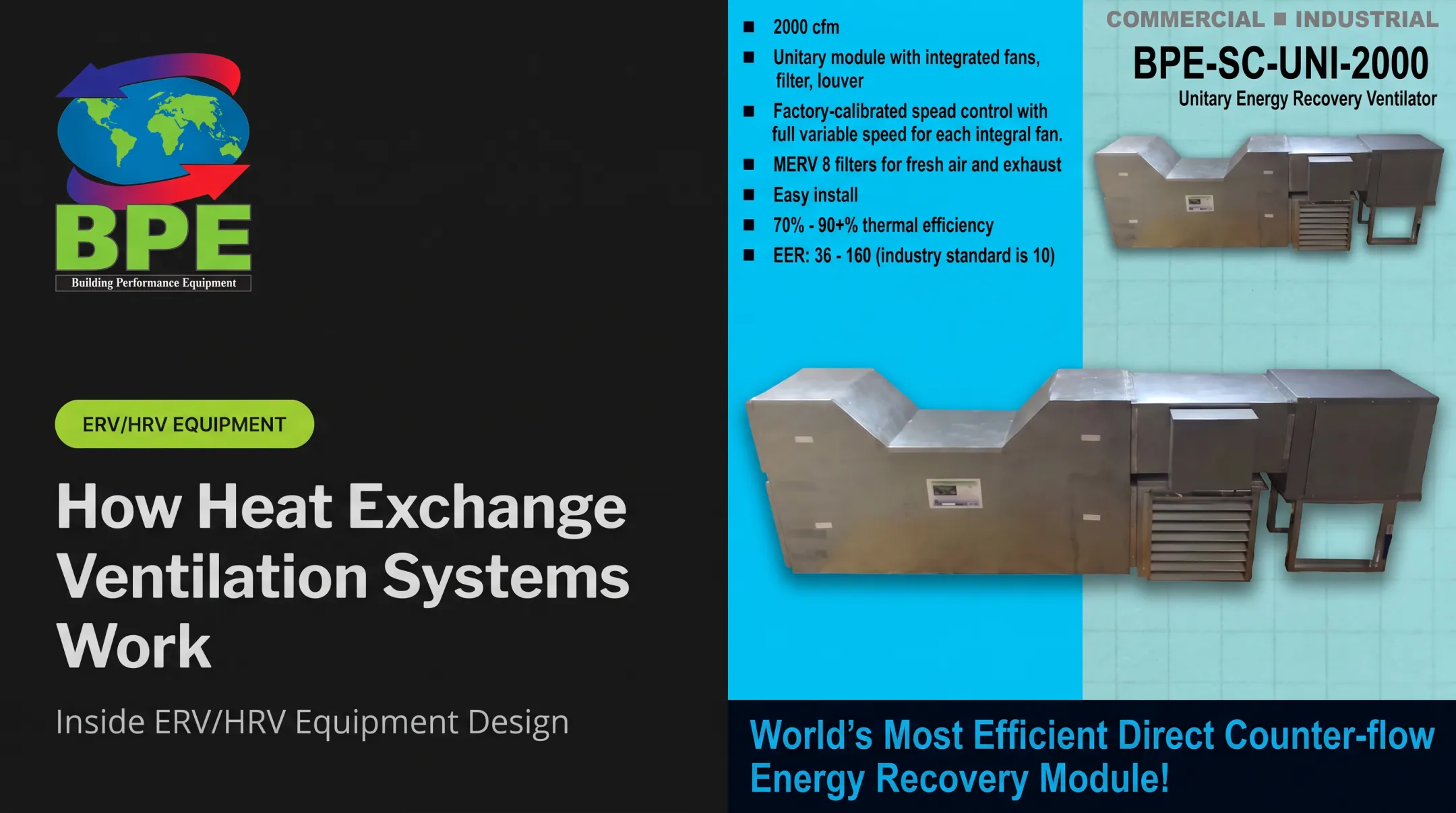
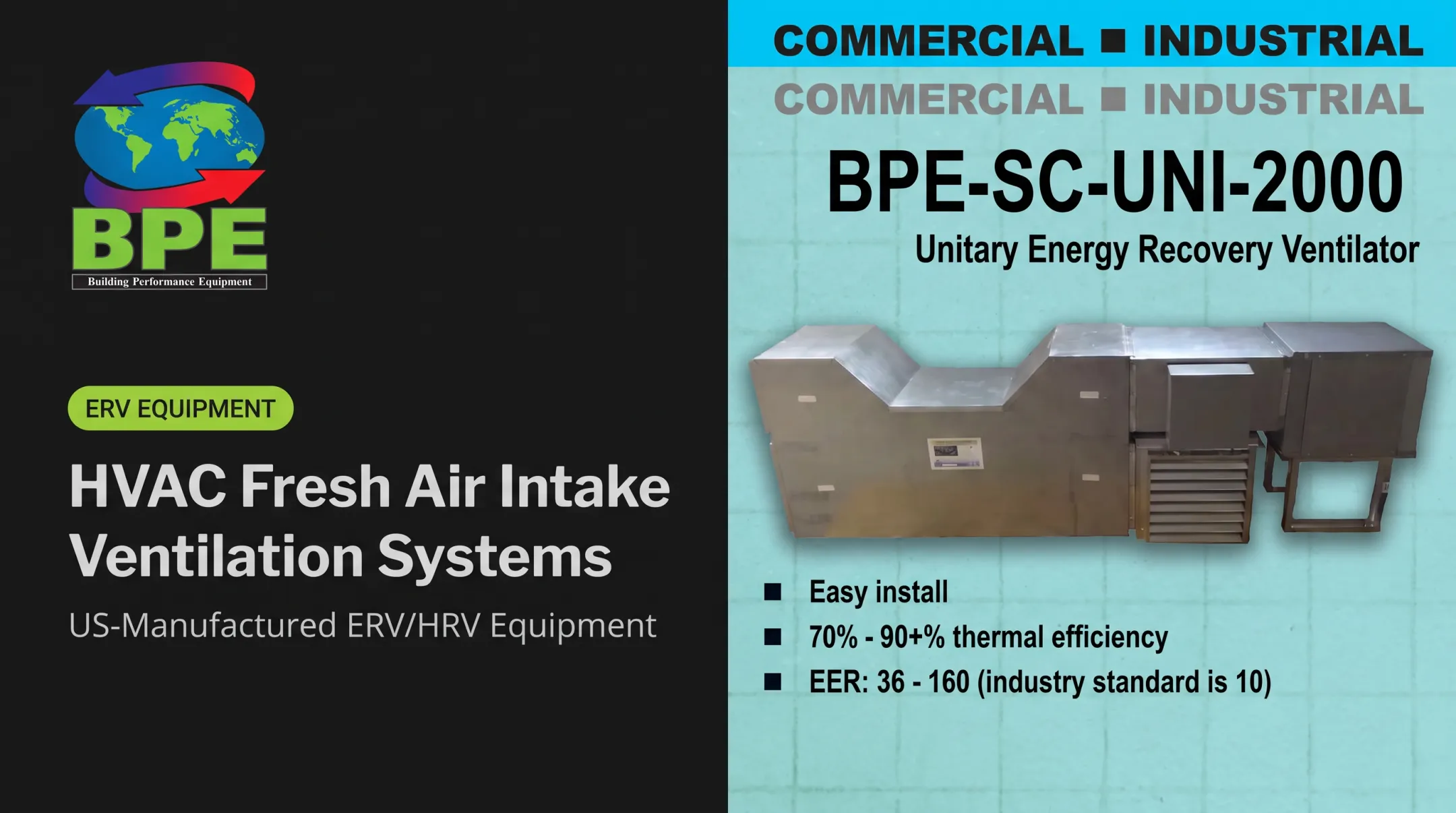
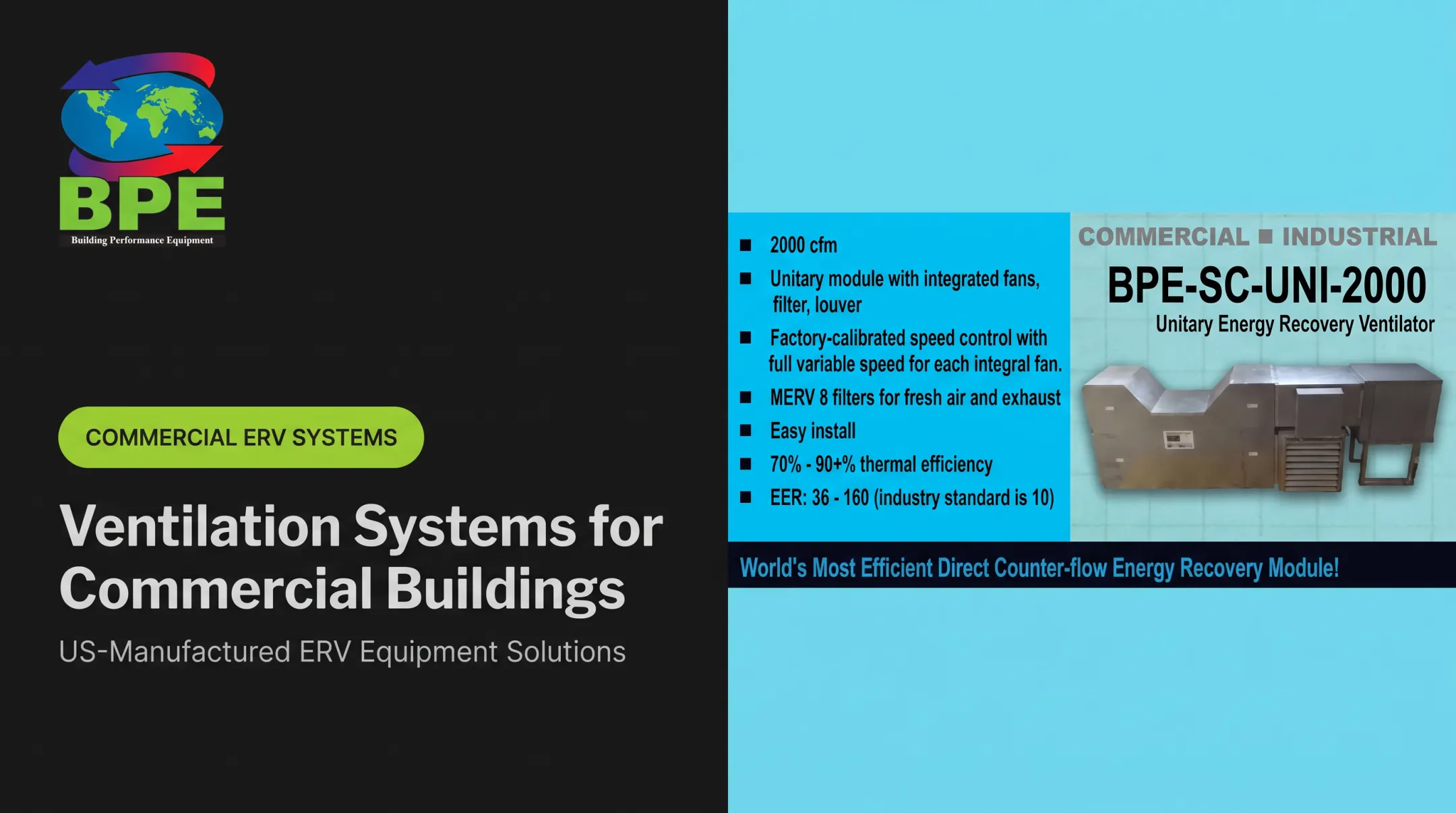
Building Performance Equipment's modular, stackable energy recovery units are one option worth evaluating for commercial, institutional, and retrofit projects. The modules are designed to fit through standard doorways and assemble on-site without structural work or crane access, which matters for projects like school retrofits where rooftop access is limited.
Hopewell Valley Regional School District, for instance, reported more than 32% energy savings over five years alongside improved thermal comfort after installing recovery ventilation. Always confirm efficiency, static-pressure, and application claims against current product documentation before specifying.
For schools, multifamily buildings, industrial exhaust, or any project with complex pressure requirements, bring in an MEP engineer or qualified HVAC contractor early. These aren't situations to solve with a catalog and a guess.
How to Maintain and Monitor Ventilation Performance
A ventilation system only improves air quality if it keeps running correctly. That requires a maintenance routine, not a one-time install.
Maintenance checklist:
- Check filters monthly; replace per manufacturer guidance
- Keep outdoor-air intakes and exhaust outlets clear of debris
- Confirm grilles and dampers operate smoothly
- Listen for unusual fan noise or vibration
- Inspect heat/energy exchange cores roughly annually for fouling
- Verify condensate paths drain properly
- Calibrate sensors and controls so they stay responsive
Warning Signs
Investigate promptly if you notice:
- Persistent stuffiness or unusual odors
- Condensation on windows or walls
- Weak or uneven airflow
- Excessive noise
- Unexplained increases in energy use
What to Monitor
Periodic testing of airflow, temperature, relative humidity, and runtime catches problems early. Carbon dioxide monitoring is useful as an occupancy indicator, but it is not a complete air-quality measurement on its own.
A studio client, Woodstock Infusions, used real-time CO2 readings to adjust ERV fan speed during busy class times, keeping occupant comfort consistent without guesswork.
Seasonal changes matter too. Extreme outdoor temperatures, high-humidity periods, and freeze risk all call for schedule or control adjustments. Turning ventilation off to save energy without accounting for occupancy or IAQ needs can undo the benefits a system was designed to provide.

If a building shows persistent ventilation or energy problems despite regular maintenance, focus any consultation on measured airflow and energy data rather than a generic equipment swap.
Frequently Asked Questions
What is an HVAC ventilation system?
It's the mechanical process of exchanging outdoor air with indoor air to dilute pollutants, manage humidity, and support occupant comfort. It works alongside, but separately from, heating and cooling equipment.
What is the difference between HVAC and ventilation?
HVAC is the umbrella term covering heating, ventilation, and air conditioning together. Ventilation specifically refers to introducing outdoor air and removing stale indoor air, a function heating and cooling equipment doesn't automatically provide.
What are the four types of ventilation systems?
The four main types are natural, exhaust-only, supply-only, and balanced mechanical ventilation. HRVs and ERVs are energy-recovery forms of balanced ventilation.
What are the three most common types of HVAC systems?
Common configurations include split systems, packaged systems, and ductless or variable-refrigerant-flow systems. These describe heating and cooling equipment, a separate decision from ventilation strategy.
What is the most effective ventilation system for a home?
It depends on climate, humidity levels, airtightness, occupancy, and budget. In many high-performance or tightly sealed homes, a properly sized balanced HRV or ERV offers the most predictable results.
Should I leave my ventilation system on all the time?
Many systems are designed for continuous low-speed or scheduled operation rather than constant full-speed running. Follow the manufacturer's instructions, local IAQ needs, and applicable code requirements when setting a runtime schedule.