
That range exists because "fresh air ventilation system" covers wildly different equipment. A bathroom exhaust fan, a whole-house fan, a residential energy recovery ventilator (ERV), and a commercial dedicated outdoor air system (DOAS) all technically qualify. Some systems simply move air. Others, like ERVs and heat recovery ventilators (HRVs), also transfer energy between incoming and outgoing air streams to cut heating and cooling costs.
This guide breaks down 2026 US pricing by system type, the factors that move the price, and how to evaluate a quote without fixating on the lowest number.
Key Takeaways
- Residential ERV equipment runs about $2,000–$2,400; installed with existing ductwork, typically $3,500–$4,200.
- System type, required airflow (CFM), ductwork condition, and controls complexity drive most of the price variation.
- Exhaust and whole-house fans cost less upfront than ERV/HRV systems but skip energy recovery and air tempering.
- The best-value system matches airflow needs and climate, not just sticker price.
How Much Does a Fresh Air Ventilation System Cost in 2026? (Pricing Overview)
There's no single national price tag for fresh air ventilation, because the category spans simple fans, balanced energy-recovery units, and industrial-scale DOAS equipment. Before comparing numbers, separate three pricing tiers:
- Equipment-only — the unit itself, sometimes with filters and a basic controller
- Partial installation — equipment plus labor, assuming existing ductwork and wiring
- Fully installed — equipment, new ductwork, electrical work, permits, balancing, and commissioning
2026 Pricing by System Type
| System Type | Equipment Only | Typical Installed Range | Notes |
|---|---|---|---|
| Basic exhaust-only fan (70 CFM) | $98-$234 | $352-$914 | Single-room fan; not a whole-home solution |
| Whole-house fan (5,700 CFM) | $546-$637 | $1,045-$2,300 | Cooling fan, not balanced ventilation |
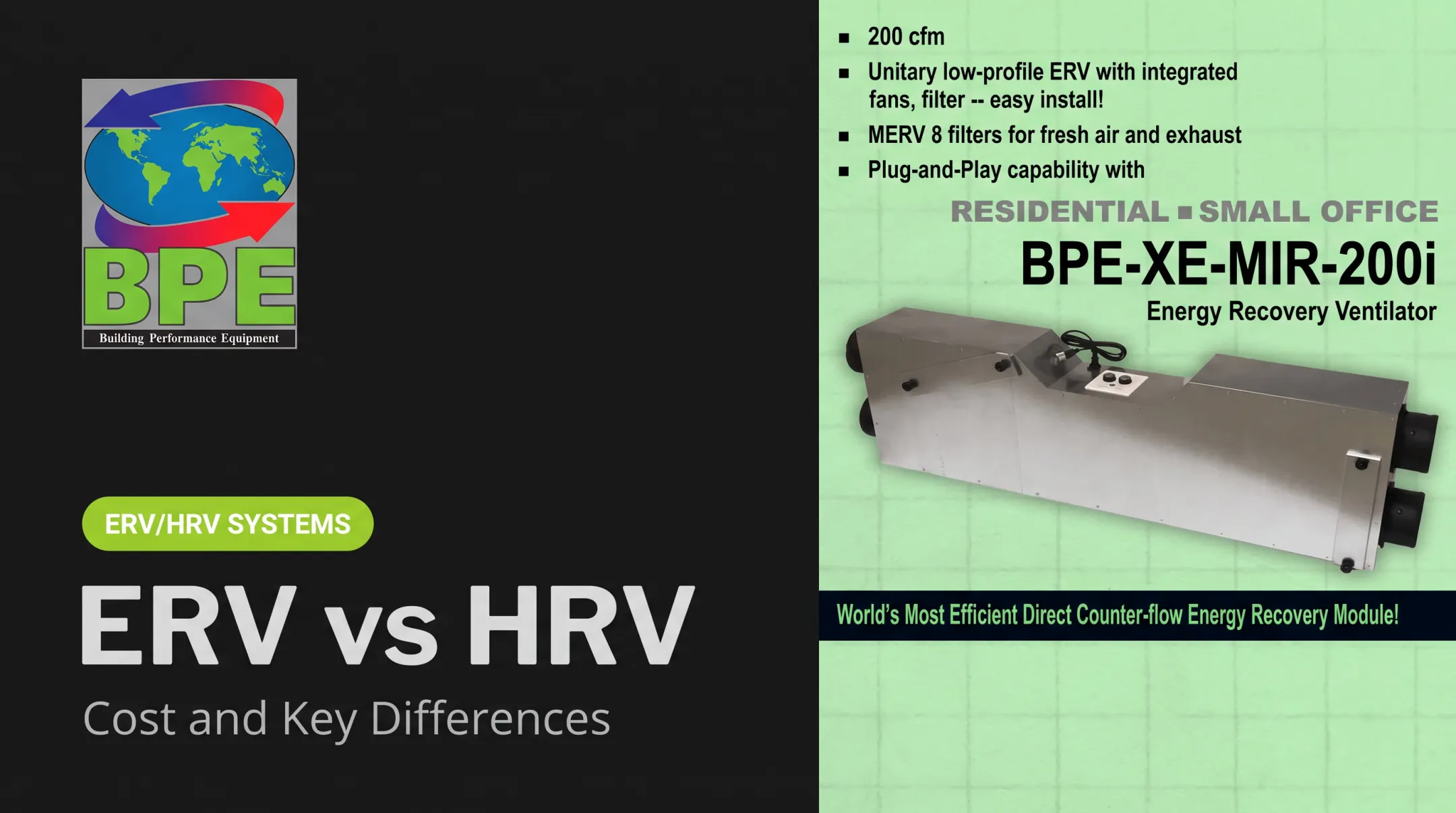
| Residential ERV (220 CFM) | $2,030-$2,369 | $3,566-$4,219 | Assumes existing ductwork; permits excluded |
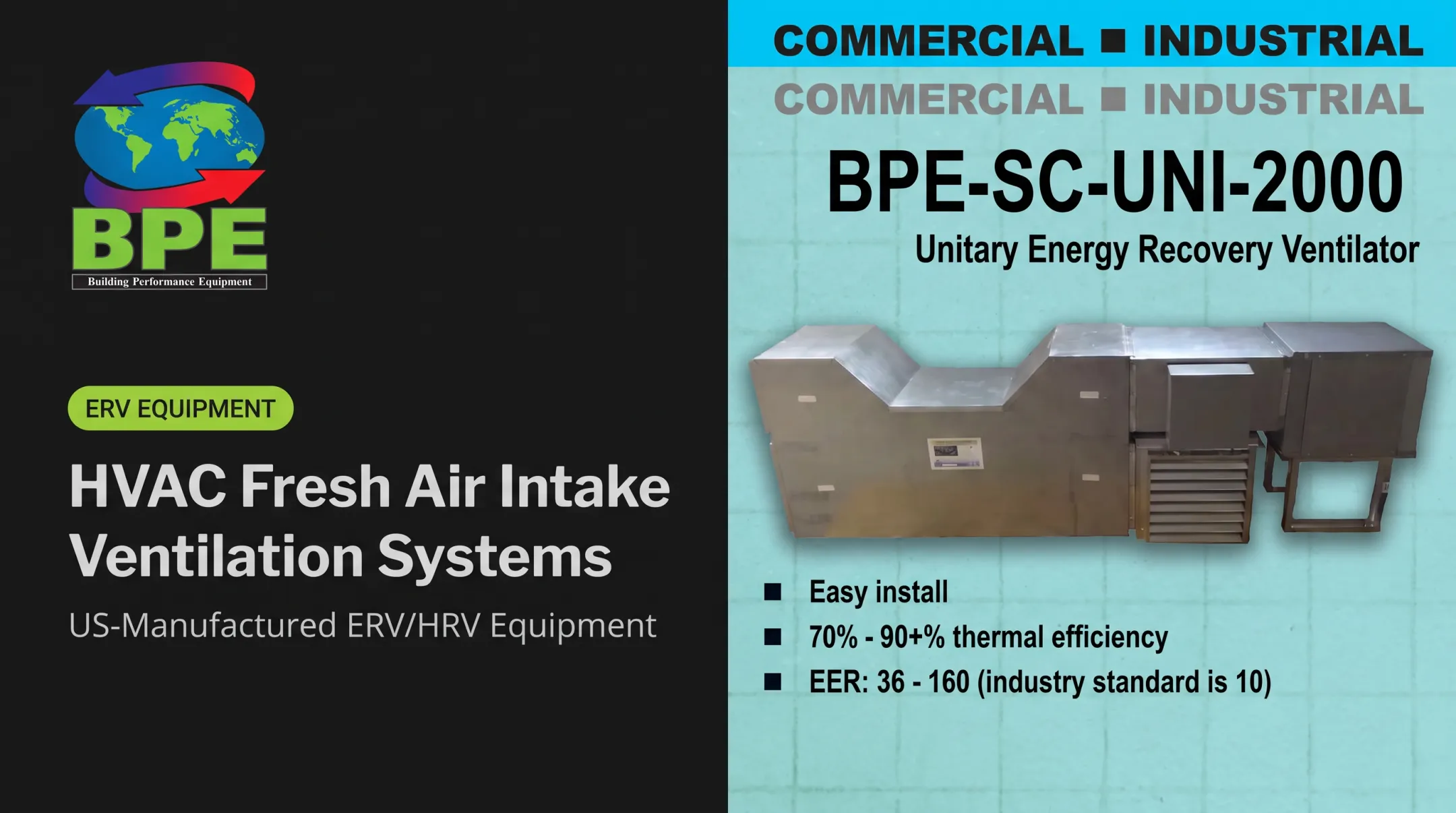
| Commercial ERV equipment (list price) | $5,195-$30,695 | Project-specific | Recent manufacturer list pricing for 2026 planning; not a turnkey bid |
| Industrial/multifamily DOAS | Varies by CFM | Project-specific | Scales with airflow, zoning, and process exhaust needs |

A 2026 national cost estimator for residential air exchangers lands in that same installed band when the home already has usable ductwork. Permits and major alterations are excluded, so a retrofit with new duct runs costs more.
Whole-house fans aren't a substitute for balanced ventilation. They move large volumes of air for cooling, not continuous, controlled fresh-air exchange, and they don't recover energy.
If the job needs continuous ventilation with energy recovery instead, size the equipment to the airflow—not a cooling fan rating. Building Performance Equipment's residential and commercial ERV lines span roughly 60 CFM to 20,000 CFM for apartments, homes, and commercial or industrial spaces. Pricing is project-specific; confirm current specifications and quotes before you lock a budget.
Watch for this trap: a low advertised price usually means equipment only, or installation with existing ducts, existing electrical capacity, and no code upgrades. A full retrofit with new ductwork, a dedicated circuit, exterior penetrations, and commissioning can run several times higher.
Key Factors That Affect the Cost of a Fresh Air Ventilation System
Price depends on technical specs, building conditions, and local requirements—not the equipment label alone.
System Type and Energy-Recovery Capability
Exhaust-only and supply-only systems are mechanically simple: one fan, minimal ductwork, basic controls. Balanced systems use two fans and, in ERV or HRV configurations, add a heat-exchange core.
- Exhaust-only: Lowest install cost, but can depressurize the building and pull pollutants through gaps
- Supply-only: Filters incoming air without tempering it
- Balanced (no recovery): Higher cost than simple systems, with no heating or cooling load reduction
- ERV/HRV: Highest equipment cost, with energy recovery that cuts the conditioning burden on incoming air
Climate should guide the ERV-versus-HRV decision. The Department of Energy notes that HRVs transfer heat and suit colder, drier climates, while ERVs transfer both heat and moisture and work well in humid conditions. Where winter humidity runs high, some ERV units—including Building Performance Equipment's line—can be field-modified toward HRV-style operation.
Airflow, Capacity, and Building Scale
Required airflow isn't a square-footage guess. The 2024 International Residential Code sets whole-house ventilation rates by floor area and bedroom count, ranging roughly 30-165 CFM across typical dwelling sizes, with a potential 30% reduction for qualifying balanced, room-distributed systems. Commercial buildings use ASHRAE's occupancy-and-area formula instead of a flat rate per square foot.

Larger airflow requirements push costs up through:
- Bigger fans and higher static pressure
- Additional duct runs and zoning
- Continuous-operation equipment ratings
Industrial exhaust may also fall under OSHA process-exhaust rules rather than general ventilation codes, which can add design and compliance cost.
Ductwork, Access, and Retrofit Complexity
Installation cost swings hardest on this factor. Existing, accessible ductwork keeps labor low. Tight attics, finished ceilings, or long exterior runs raise it fast.
- New construction: Ventilation planned with framing and other mechanical work
- HVAC replacement: Exposed ductwork often cuts duplicate labor
- Retrofit: New penetrations, insulation, sealing, and sometimes structural repairs
Coordinating ventilation installation with a larger HVAC project typically costs less than a standalone retrofit, since crews aren't opening walls twice.
Controls, Filtration, Electrical Work, and Compliance
Humidity sensors, CO2-based demand control, zoning, and building-management-system integration add upfront cost but reduce unnecessary runtime over the system's life. A basic 120V plug-in residential unit needs far less electrical work than a commercial system with a dedicated circuit, disconnect, and inspection.
Confirm these before finalizing a budget:
- Local permit and electrical requirements
- Filtration level for the application
- Fire/smoke dampers on runs through fire-rated assemblies
- Commissioning rules for larger new commercial projects
Cost Breakdown of a Fresh Air Ventilation System
A fair comparison separates five cost categories instead of lumping everything into one number.
Initial Equipment Purchase (One-Time)
Equipment pricing scales with CFM, recovery efficiency, filtration level, and motor type. A residential 220-CFM ERV runs $2,030-$2,369 equipment-only.
Commercial energy-recovery modules typically run $2-$6 per CFM installed, averaging around $4 per CFM. Building Performance Equipment's modular units range from compact 60-200 CFM residential models up to stackable 20,000-CFM commercial/industrial packages.
Installation, Ductwork, and Setup (One-Time)
This covers labor, duct materials, grilles, exterior hoods, electrical connections, permits, airflow balancing, and commissioning. Using the residential ERV example, installed pricing of $3,566-$4,219 assumes existing ducting; new duct distribution, significant electrical work, or difficult access will push costs higher.
Operating Costs (Recurring)
Annual electricity use depends on fan wattage, static pressure, and runtime hours. Manufacturer data for a 100-CFM residential ERV shows:
- 81W at low static pressure → roughly 710 kWh/year running continuously
- 90W at higher static pressure → roughly 788 kWh/year
A 200-CFM unit drawing 129W runs closer to 1,130 kWh/year. At a typical $0.09 per kWh residential rate, that's roughly $64-$100 annually in fan energy, separate from the heating and cooling savings the recovered energy provides.

Dirty filters and undersized ductwork raise static pressure and push wattage toward the higher end.
Maintenance and Repairs (Recurring)
Routine upkeep is modest compared to a full HVAC system:
- Replacement filters: roughly $12.50-$15 per filter for exhaust and fresh-air sides
- Replacement fans: around $55 each for residential modules
- Core cleaning, damper checks, and sensor calibration as needed
Many ERV cores carry long warranty periods. Building Performance Equipment specifies a 10-year limited warranty against heat-exchanger corrosion on its commercial line.
Upgrades and Replacements (Periodic)
Budget for periodic capital items in demanding environments:
- Fan motor replacement
- Control upgrades
- Core replacement under harsh or high-duty-cycle conditions
High-duty-cycle commercial projects sometimes assume a shorter core life, so multiple replacement cores may belong in the original project budget.
Low-Cost vs High-Cost Fresh Air Ventilation Systems—and How to Set the Right Budget
Price alone doesn't determine the right system. The correct choice depends on required airflow, climate, indoor air quality goals, and how the building is used.
Performance, Comfort, and Air Quality
Lower-cost exhaust-only or supply-only fans move air but offer limited filtration and no energy recovery. They work fine for a single bathroom or small space.
Higher-cost ERV and HRV systems temper incoming air before it enters the occupied space. That matters more in extreme climates or tightly sealed, high-performance buildings.
Durability, Maintenance, and Long-Term Value
Purchase price is only part of the investment. Compare:
- Motor efficiency and expected fan life
- Filter availability and replacement cost
- Core warranty length
- Service access for cleaning and inspection
Spending more upfront tends to pay off for tight, high-performance homes, schools, and multifamily buildings in cold climates. The same holds for facilities with continuous process exhaust, where energy recovery and reliability matter more than minimum compliance.
Budget Estimation and Commonly Missed Costs
Build a preliminary budget from actual use conditions, not assumptions. Start with:
- Required CFM based on code and occupancy, not square footage alone
- Operating hours — continuous versus intermittent
- Existing infrastructure — ductwork, electrical capacity, access
- Controls — basic on/off versus demand-controlled or BMS-integrated
- Permits and commissioning requirements for the jurisdiction
- Contingency for unforeseen access or structural issues
Costs that get missed most often include:
- Airflow testing and balancing
- Commissioning
- Exterior weatherproofing
- Structural repairs around new penetrations
- After-hours labor for occupied buildings
When comparing quotes, verify:
- Model numbers, rated airflow, and efficiency
- Sound levels
- Included ductwork versus exclusions
- Warranty terms
- Who handles code compliance
Two quotes with similar bottom lines can represent very different scopes of work.
For school retrofits, multifamily buildings, or industrial facilities with process exhaust that need high-efficiency air-to-air energy recovery, Building Performance Equipment works with engineers, contractors, and facilities teams. Equipment is specified for the actual project, not a generic price point.
Requesting project-specific details upfront closes the gap between an advertised price and the real installed cost.
Conclusion
Fresh air ventilation system cost in 2026 ranges from a $350 exhaust fan to a six-figure industrial DOAS installation because the equipment category is just as broad. An accurate budget separates equipment, ductwork, labor, controls, permits, commissioning, energy use, and maintenance into distinct line items instead of one number.
The right system delivers the airflow and indoor air quality the building actually needs, while balancing comfort, energy recovery, reliability, and long-term cost. That calculation differs for every building, which is why a scoped quote beats a generic estimate.
Frequently Asked Questions
How does a fresh air vent work?
A fresh air ventilation system draws outdoor air into a building while expelling stale indoor air, using separate fans or a balanced setup. Energy recovery (ERV) and heat recovery (HRV) units add a heat-exchange core that transfers energy between the two streams, cutting the heating or cooling penalty.
Does a heat recovery system use a lot of electricity?
Electricity use depends on fan wattage, airflow rate, static pressure, and runtime hours, not the heat-recovery process itself. A typical 100–200 CFM residential unit uses roughly 700–1,130 kWh per year in fan energy—separate from the heating and cooling energy it recovers.
What is an ERV system?
An energy recovery ventilator exchanges indoor and outdoor air through a heat-exchange core, transferring heat and, depending on the equipment and climate, moisture between the two streams. This reduces the load on heating and cooling equipment.
What is a smart vent system?
A smart vent typically controls airflow to a single room or duct branch, which differs from whole-building ventilation. True smart ventilation systems use sensors, schedules, or demand control (such as CO2 monitoring) to adjust whole-building outdoor air intake. That control approach affects both system price and energy use.